How to Read the Quran: A Beginner's Complete Guide
If you can't read Arabic script but want to recite the Quran correctly, you're not alone. Millions of Muslims around the world learn to read the Quran as adults, often starting with transliteration before moving toward proper Tajweed and eventually reading directly from the Arabic text. The confusion usually isn't about whether to learn — it's about where to start and which tools actually help versus which ones slow you down.
This guide walks through the practical path: learning the Arabic letters, using transliteration wisely, applying Tajweed rules, and choosing a translation you can trust for meaning.
Quick Answer
The correct order for beginners is: learn the Arabic alphabet and basic pronunciation first, use transliteration only as a temporary bridge, apply Tajweed rules as soon as possible for accurate recitation, and use a reputable translation separately to understand meaning. Skipping straight to translation-only reading, or relying on transliteration indefinitely, are the two most common mistakes that slow progress.
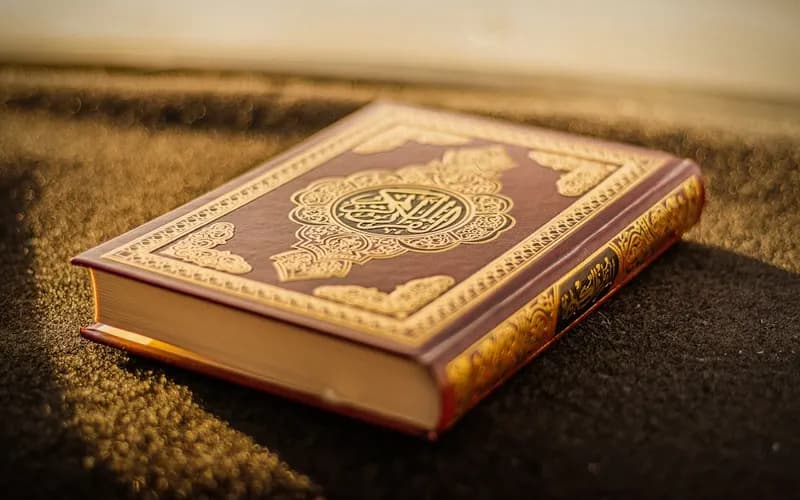
Why Learning to Read the Quran Properly Matters
The Quran isn't read the way a regular book is read. Islamic tradition treats its recitation itself as an act of worship, not merely information transfer. Allah describes the Quran's revelation and its purpose for reflection in Surah Al-Qamar 54:17, where He says the Quran has been made easy to remember — a verse scholars often cite to encourage beginners who feel intimidated by Arabic.
Prophet Muhammad ﷺ himself received the Quran through recitation, not writing, and taught his companions orally before it was later compiled into written form. That oral tradition is part of why correct pronunciation still matters today — it connects a modern reader in Jakarta, Lagos, or Chicago to the same sounds transmitted through unbroken chains of teachers back to the Prophet ﷺ. If you want the fuller story of how the text itself came together, the guide on who wrote the Quran and how it was preserved covers that history in depth.
Step 1: Learn the Arabic Alphabet First
Before touching transliteration seriously, spend time on the 28 Arabic letters (huroof) and how each one is physically pronounced. Many beginner programs, such as Noorani Qaida, exist specifically for this stage. This step feels slow, but it's the difference between someone who eventually reads fluently from the Mushaf (the physical Quran text) and someone stuck relying on Latin-letter guides for years.
Step 2: Use Transliteration as a Bridge, Not a Crutch
Transliteration writes Arabic sounds using Latin letters — for example, "Bismillahi r-Rahmani r-Rahim" instead of the Arabic script. It's genuinely useful early on, especially for memorizing short surahs like Al-Fatiha before you can read Arabic script fluently. If you haven't yet, the breakdown of Surah Al-Fatiha's meaning and translation is a good first surah to practice with.
The problem is dependency. Arabic has sounds that Latin letters simply cannot represent accurately — the heavy "ح" versus the soft "ه", or the emphatic "ص" versus "س", for instance. Color-coded transliteration systems have improved this by marking elongations and emphatic letters visually, which helps, but they remain a stepping stone rather than a destination.
Step 3: Learn and Apply Tajweed Rules
Tajweed is the science of correct Quranic pronunciation. Allah instructs in Surah Al-Muzzammil 73:4, "recite the Quran with measured recitation" (tarteel), which scholars point to as an early foundation for the discipline of Tajweed. Getting the basics right early prevents habits that are harder to unlearn later.
| Tajweed Rule | What It Means | Why It Matters |
|---|---|---|
| Ghunnah | Nasal sound held for noon/meem with shaddah | Prevents flat, incorrect pronunciation |
| Qalqalah | A slight bounce on certain letters (ق ط ب ج د) at a pause | Preserves the letter's distinct sound |
| Madd | Elongation of vowel sounds for a set duration | Avoids rushing verses and changing meaning |
| Ikhfa | Hidden/nasalized pronunciation of noon before certain letters | Keeps flow smooth and accurate |
| Idgham | Merging one letter's sound into the next | Prevents choppy, disconnected recitation |
Prophet Muhammad ﷺ described the reward for effort in this journey in a hadith recorded in Sahih Bukhari and Sahih Muslim, where he said the one who reads the Quran skillfully will be among the noble angelic scribes, while the one who struggles through it with difficulty receives a double reward. That hadith alone is worth holding onto when Tajweed feels frustrating at first — the struggle itself is not wasted effort.
Step 4: Choose a Reliable Translation for Meaning
Reading Arabic without understanding meaning eventually feels hollow for most learners, which is why pairing recitation with a trusted translation matters. Dr. Shabir Ally has pointed out that every English translation carries certain interpretive tendencies — word choices that lean toward one school of thought or another — so it's worth comparing at least two translations rather than treating one as absolute.
Historically, most scholars held that the Quran should primarily be read in Classical Arabic, since translation cannot fully capture its linguistic structure, and this remains the majority scholarly position on ritual recitation in Salah. Reading translations for study and reflection outside of prayer, however, is widely encouraged. You can compare verse-by-verse Arabic text with multiple English translations directly on Quran.com, and cross-check specific rulings on translation and recitation through IslamQA.
Comparing the Three Tools
| Tool | Purpose | Best Used For | Limitation |
|---|---|---|---|
| Transliteration | Pronunciation guide using Latin letters | Early memorization, quick reference | Cannot capture all Arabic sounds accurately |
| Tajweed | Rules for correct Arabic pronunciation | Accurate, respectful recitation | Requires guided practice, not self-taught alone |
| Translation | Meaning in another language | Understanding, reflection, study | Cannot fully replace the Quran's original Arabic |
Common Mistakes to Avoid
- Relying on transliteration for years instead of transitioning to Arabic script once basic letters are learned.
- Rushing recitation speed before accuracy, which cements mispronunciations that are harder to fix later.
- Assuming one translation gives the complete meaning rather than comparing translations or consulting tafsir (commentary).
- Skipping a teacher entirely — Tajweed involves subtle mouth and tongue positions that are difficult to self-correct from text alone.
- Confusing translation for revelation itself — the Quran vs Bible comparison shows why Muslims treat the Arabic text as uniquely preserved; you can explore that distinction in the complete guide comparing the Quran and the Bible.
Why This Matters Today
Millions of Muslims outside the Arab world — across South Asia, Southeast Asia, Africa, and Western countries — learn Quranic Arabic as a second or third language. In places like India, where Muslim communities have preserved Quranic education for centuries alongside diverse local languages, this transliteration-to-Tajweed journey is a normal, respected part of growing up Muslim rather than a shortcut; you can read more about that broader context in the guide to Islam in India. Recognizing that this learning curve is universal — not a personal failure — often removes the intimidation beginners feel.
Key Takeaways
- Learn Arabic letters before depending heavily on transliteration.
- Treat transliteration as a temporary bridge, especially for short surahs like Al-Fatiha.
- Apply Tajweed rules early to build correct pronunciation habits from the start.
- Use translations for meaning, but compare more than one and consult tafsir where possible.
- Scholars generally favor reciting the Quran in its original Arabic during prayer.
- Learn with a qualified teacher whenever possible; self-study alone rarely corrects subtle pronunciation errors.
Learning to read the Quran is ultimately an act of drawing closer to Allah's own words, not just acquiring a language skill. Every letter practiced, every Tajweed rule corrected, and every verse understood through translation is part of a tradition stretching back to the companions who first learned directly from Prophet Muhammad ﷺ. Be patient with the process, seek out a knowledgeable teacher when you can, and keep returning to authentic sources rather than shortcuts — the reward, as the Prophet ﷺ promised, is given even for the effort of struggling through it.
Sources and References
Quran:
- Surah Al-Qamar 54:17
- Surah Al-Muzzammil 73:4
Hadith:
- Sahih Bukhari and Sahih Muslim — on the reward for reciting the Quran, including for those who read with difficulty
Websites:
- Quran.com — Arabic text, transliteration, and multiple translations
- Sunnah.com — Hadith collections referenced regarding Quran recitation
- IslamQA.info — Scholarly rulings on Quran recitation, translation, and Tajweed
Editorial Commitment
Research Department: Quran Research Team
Reviewed by: Reading Islam Editorial Review Team
Review Process: Reviewed against Quran and recognized Islamic sources
Reading Islam Editorial Team
ExpertA research team creating educational content about Islamic history, culture, and faith using verified historical references and trusted sources.
Explore more
Continue Reading
Popular Umrah Guides
Umrah Guide Step by Step: How to Perform Umrah for Beginners
How to Perform Umrah Step-by-Step (A Beginner's Guide)
Complete Umrah Duas Guide: All Prayers & Supplications with Arabic Text
Ultimate Umrah Packing List 2026: What to Bring & What to Leave
15 Common Umrah Mistakes to Avoid: Expert Tips for a Valid Pilgrimage
Explore Makkah & Kaaba
Qibla Direction Explained: How Muslims Face the Kaaba in Prayer
الحجر الأسود (Hajar al-Aswad): Meaning, History, and Place in Tawaf
Kaaba Door Guide: Why It Is Raised, How It Changed, and Why It Matters
Mecca Meaning in Islam: Why It Is Called Makkah al-Mukarramah
Masjid al-Haram Map Guide: How to Understand the Sacred Mosque Layout
Masjid al-Haram Guide: The Sacred Makkah Mosque at the Heart of Islam
Recommended Travel Resources
Best Umrah Packages 2025: VIP vs Budget Options
Best Umrah Packages 2026: Finding Affordable Options
Economy Umrah Packages: Affordable Booking Guide for Budget Pilgrims
Umrah Package With Flights: What Should Be Included Before You Book
Air Ticket for Umrah: Flight Booking Guide, Timing, and Package Strategy
Umrah Expenses from Pakistan: Full Cost Breakdown and Booking Plan