The Quran vs The Bible: A Complete Islamic Guide (2026)
If you've ever wondered why Muslims and Christians both claim their scripture is the word of God, yet arrive at very different conclusions about Jesus, salvation, and prophethood, you're asking one of the oldest questions in comparative religion. This guide explains the Quran and the Bible side by side, using Islamic sources rather than guesswork, so you understand not just what differs, but why it differs.
Islam does not treat this as an abstract academic exercise. The Quran itself speaks directly about earlier scriptures, their origins, and what happened to them over time. Understanding this history matters for Muslims building a firm Aqeedah, and for non-Muslims genuinely curious about Islamic belief regarding the Torah, the Gospel, and the Quran.
Quick Answer
The Quran is a single, unified text revealed in Arabic to Prophet Muhammad ﷺ between 610 and 632 CE, memorized and written down during his lifetime, and preserved without alteration since then. The Bible is a compiled library of texts written by different authors across roughly 1,500 years, translated repeatedly, and assembled through church councils long after the events it describes. Islam teaches that the earlier scriptures — the Tawrat given to Prophet Musa عليه السلام and the Injil given to Prophet Isa عليه السلام — were originally divine revelation, but their surviving texts underwent human editing (Tahrif) over centuries, which is why the Quran was sent as the final, protected confirmation and correction.
Why This Comparison Matters
Muslims are taught to believe in all the prophets and books Allah sent, not to dismiss them. Surah An-Nisa 4:136 instructs believers to have faith "in Allah, His Messenger, the Book He revealed to His Messenger, and the Scripture He revealed before." That verse alone explains why this topic isn't optional trivia for Muslims — it's part of Islamic creed (Aqeedah).
At the same time, many sincere non-Muslims researching Islam want to know exactly where the Quran agrees with, and departs from, the Bible. Getting this right avoids two common errors: assuming the two books say the same thing with different names, or assuming Islam simply rejects the Bible outright. Neither is accurate.
What Islam Teaches About Revelation and Scripture
Islam teaches that Allah has sent guidance to humanity through a chain of prophets, each given a scripture suited to their people and time. The Quran names several of these books directly: the Suhuf of Prophet Ibrahim عليه السلام, the Tawrat (Torah) given to Prophet Musa عليه السلام, the Zabur (Psalms) given to Prophet Dawud, and the Injil (Gospel) given to Prophet Isa عليه السلام.
Surah Al-Ma'idah 5:48 describes the Quran as "a guardian over" the previous scriptures — confirming what was true in them while correcting what had been distorted. This is the theological center of the Islamic position: earlier revelations were genuine when they were sent, but human transmission over centuries introduced changes.
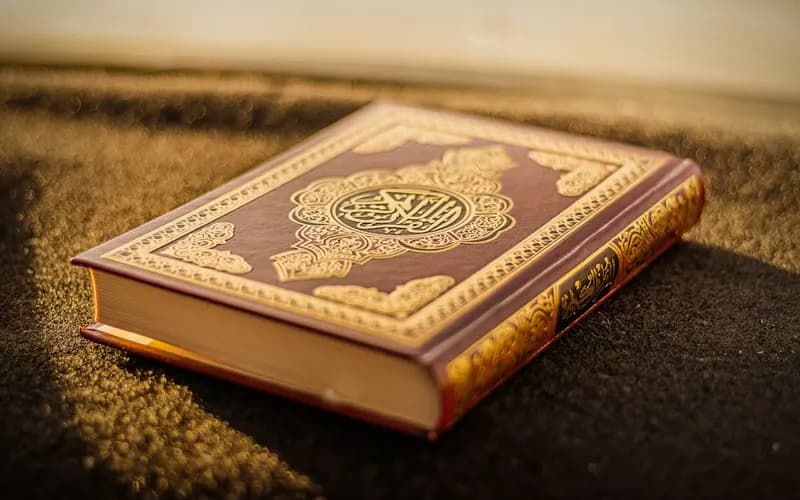
The Quran addresses this corruption, known in Islamic scholarship as Tahrif, in several places. Surah Al-Baqarah 2:75 asks rhetorically whether believers expect People of the Book to accept faith when "a party of them used to hear the words of Allah and then distort it knowingly." Surah An-Nisa 4:46 similarly describes some who "distort words from their [proper] usages." Islamic scholars, including classical commentators like Ibn Kathir, generally understand Tahrif as occurring in two forms — Tahrif al-lafz (altering the actual wording) and Tahrif al-ma'na (altering the meaning through interpretation), with scholars differing on how extensively each form applied historically.
Regarding the Quran's own preservation, Allah states in Surah Al-Hijr 15:9: "Indeed, it is We who sent down the Reminder, and indeed, We will be its guardian." Muslims point to this verse, combined with the historical record of Quranic memorization (hifz) and written compilation under the early caliphs, as the reason the Quran exists today in the same Arabic text recited fourteen centuries ago. You can read more about how this process unfolded in our piece on the first revelation of the Quran to Prophet Muhammad ﷺ.
Historical Background: Two Very Different Origins
The Bible's Old Testament developed over roughly a thousand years, drawing on oral traditions, priestly records, and multiple authors, before being canonized through various Jewish and later Christian councils. The New Testament was written decades after Prophet Isa's عليه السلام time on earth, primarily by his followers rather than by him directly, and the canon itself was debated and finalized across several church councils over the following centuries, with different Christian traditions (Catholic, Orthodox, Protestant) still recognizing different sets of books today.
The Quran's history looks different. It was revealed to Prophet Muhammad ﷺ across 23 years, recited publicly, memorized by hundreds of companions, and written down by scribes during his lifetime — not generations later. The Uthmanic codex, standardized within about two decades of his passing, matches manuscripts and recitation traditions preserved continuously since. This is a key reason Muslims describe the Quran as directly transmitted revelation rather than a later compiled record.
Quran vs Bible: A Side-by-Side Comparison
| Aspect | The Quran | The Bible |
|---|---|---|
| Language of origin | Classical Arabic, preserved in original form | Hebrew, Aramaic, and Greek across different books |
| Authorship | Revealed by Allah to one Prophet ﷺ | Compiled writings from multiple authors over centuries |
| Timeframe of revelation | 23 years (610–632 CE) | Roughly 1,000+ years across Old and New Testaments |
| Compilation | Finalized within decades, under companions' supervision | Canonized through church councils over several centuries |
| Islamic view on preservation | Believed fully preserved (Surah Al-Hijr 15:9) | Believed to contain later human alterations (Tahrif) |
| Central message | Tawheed — absolute Oneness of Allah | Varies by book; later theology developed doctrine of Trinity |
Other Viewpoints Explained
Mainstream Christian scholarship generally holds that the Bible, despite its compilation history, represents divinely inspired and reliably transmitted scripture, with textual criticism used to reconstruct the most accurate manuscripts available. Jewish scholarship views the Tanakh similarly regarding its own tradition. These are sincerely held positions, and presenting them accurately matters for honest interfaith dialogue.
Islam respectfully differs on the question of preservation and on theological conclusions drawn from later texts, particularly regarding the nature of Prophet Isa عليه السلام. Where later Christian creeds describe him as divine or part of a Trinity, Islam maintains he was a mighty prophet and messenger, born miraculously, but fully human. Our detailed guide on what Islam teaches about Jesus covers this in depth.
Key Differences From an Islamic Understanding
The most significant theological divide centers on Tawheed — the Oneness of Allah. The Quran repeatedly and unambiguously rejects any partner or offspring for Allah, as in Surah Al-Ikhlas 112:1-4. This underpins the entire Islamic worldview and is explained further in our guide on Tawheed in Islam.
Other notable differences include:
- Finality of revelation — Islam holds the Quran is the last scripture, with Prophet Muhammad ﷺ as the final prophet (Surah Al-Ahzab 33:40).
- Original sin — Islam does not teach that humanity inherits Adam's error; each person is born in a natural state of purity (fitrah).
- Crucifixion narrative — Islam teaches Prophet Isa عليه السلام was raised to Allah and not crucified, per Surah An-Nisa 4:157.
- Role of intercession — Salvation in Islam rests on Allah's mercy combined with faith and righteous deeds, not vicarious atonement.
Common Misconceptions
A frequent misunderstanding is assuming Islam considers the Bible entirely false or fabricated from the start. That's not accurate — Islam affirms the original Tawrat and Injil as genuine revelation while explaining that the surviving texts were altered over time. Another common mistake is assuming all Christian denominations read the Bible identically; in reality, canons and interpretations vary significantly between traditions. Readers researching this topic should also avoid assuming the Quran was "compiled from the Bible," a claim without historical basis given the Quran's distinct linguistic structure, chain of transmission, and content.
Common Mistakes to Avoid When Researching This Topic
- Comparing an English Bible translation directly against an English Quran translation without acknowledging translation limitations on both sides.
- Treating "the Bible" as one unified book rather than a collection with real historical debates about its canon.
- Assuming Islamic belief in earlier prophets means Islam validates every verse currently found in modern biblical texts.
- Overlooking authentic Hadith literature, such as collections found on Sunnah.com, which provide context the Quran alone doesn't always spell out.
- Skipping primary sources entirely and relying only on secondhand debate videos instead of reading the Quran directly.
Key Takeaways
- The Quran is one unified text revealed to Prophet Muhammad ﷺ over 23 years; the Bible is a multi-author collection compiled over more than a millennium.
- Islam affirms the original Tawrat and Injil as genuine revelation but teaches that later human transmission altered portions of the surviving texts (Tahrif).
- Allah's promise in Surah Al-Hijr 15:9 is central to why Muslims regard the Quran as textually preserved.
- Major theological differences include Tawheed versus Trinity, the nature of Prophet Isa عليه السلام, and the finality of prophethood with Prophet Muhammad ﷺ.
- Respectful, source-based study — not assumption — is the Islamic approach to comparative scripture study.
Conclusion: The Islamic Takeaway
Comparing the Quran and the Bible isn't about winning an argument; it's about understanding how Allah's guidance reached humanity across history and why the Quran stands as its final, protected form. For a Muslim, this knowledge strengthens conviction in Tawheed and gratitude for a scripture unchanged since revelation. For anyone else exploring these questions, it's an invitation to read the Quran directly rather than rely on secondhand summaries.
If you're building a deeper foundation, start with our overview of the Holy Book of Islam, and explore the difference between Islam and being Muslim as you continue learning. Authentic knowledge always traces back to the Quran, verified Hadith, and recognized scholars — not assumptions or secondhand claims.
About This Article
Reviewed by: Reading Islam Editorial Team
Review Process: Editorial review team responsible for checking content structure, sources, and factual accuracy.
Last Updated: 2026-07-14
Sources and References
Quran:
- Surah An-Nisa 4:136, 4:46, 4:157
- Surah Al-Ma'idah 5:48
- Surah Al-Baqarah 2:75
- Surah Al-Hijr 15:9
- Surah Al-Ikhlas 112:1-4
- Surah Al-Ahzab 33:40
Hadith and Classical Scholarship:
- Tafsir Ibn Kathir, commentary on Surah Al-Baqarah 2:75 regarding Tahrif
- Collections available via Sunnah.com
Websites:
- Quran.com — Quranic text and translations
- IslamQA.info — Scholarly rulings on interfaith and comparative religion topics
Reading Islam Editorial Team
ExpertA research team creating educational content about Islamic history, culture, and faith using verified historical references and trusted sources.
Explore more
Continue Reading
Popular Umrah Guides
Umrah Guide Step by Step: How to Perform Umrah for Beginners
How to Perform Umrah Step-by-Step (A Beginner's Guide)
Complete Umrah Duas Guide: All Prayers & Supplications with Arabic Text
Ultimate Umrah Packing List 2026: What to Bring & What to Leave
15 Common Umrah Mistakes to Avoid: Expert Tips for a Valid Pilgrimage
Explore Makkah & Kaaba
Qibla Direction Explained: How Muslims Face the Kaaba in Prayer
الحجر الأسود (Hajar al-Aswad): Meaning, History, and Place in Tawaf
Kaaba Door Guide: Why It Is Raised, How It Changed, and Why It Matters
Mecca Meaning in Islam: Why It Is Called Makkah al-Mukarramah
Masjid al-Haram Map Guide: How to Understand the Sacred Mosque Layout
Masjid al-Haram Guide: The Sacred Makkah Mosque at the Heart of Islam
Recommended Travel Resources
Best Umrah Packages 2025: VIP vs Budget Options
Best Umrah Packages 2026: Finding Affordable Options
Economy Umrah Packages: Affordable Booking Guide for Budget Pilgrims
Umrah Package With Flights: What Should Be Included Before You Book
Air Ticket for Umrah: Flight Booking Guide, Timing, and Package Strategy
Umrah Expenses from Pakistan: Full Cost Breakdown and Booking Plan