Who Wrote the Quran? The Complete History of Its Origin Explained (2026)
If you've ever wondered who actually wrote the Quran, you're asking a question that touches the very foundation of Islamic belief. It's also a question that gets misunderstood often, especially by readers familiar with how the Bible came together through multiple human authors across centuries. The Quran's story is different, and understanding that difference matters for anyone studying Islam seriously.
Muslims believe the Quran was not authored by any human being at all. It was revealed by God to Prophet Muhammad (PBUH) through the angel Gabriel (Jibril), delivered orally over roughly 23 years, from AD 610 until the Prophet's death in AD 632. What follows is the documented history of how those revelations were preserved, written down, and compiled into the single book Muslims read today.
Quick Answer
Muslims do not consider anyone the "author" of the Quran in the human sense. According to Islamic belief, God revealed the Quran's words to Prophet Muhammad (PBUH) through Angel Gabriel between AD 610 and 632. The Prophet recited these revelations aloud, companions memorized and wrote them down, and the text was later compiled into a single official book under Caliphs Abu Bakr and Uthman.
How the Revelation Began
The story starts in a cave outside Mecca called Hira, where Muhammad (PBUH) would retreat for reflection. At around age 40, he received the first revelation, later recorded in Surah Al-Alaq (96:1-5), beginning with the command "Iqra" — read, or recite. This first encounter is described in detail in our article on the first revelation of the Quran, which covers the emotional shock the Prophet experienced and how his wife Khadijah comforted him afterward.
What matters for the "authorship" question is this: the Prophet Muhammad (PBUH) was known to his community as ummi, generally understood to mean unlettered or unable to read and write formally. Historical sources agree on this point. He did not compose poetry, and he had no formal scribal training. Yet the Quran itself challenged the most skilled Arab poets of Mecca and Medina to produce anything comparable (Surah Al-Baqarah 2:23), a challenge that remains unanswered according to Islamic tradition.
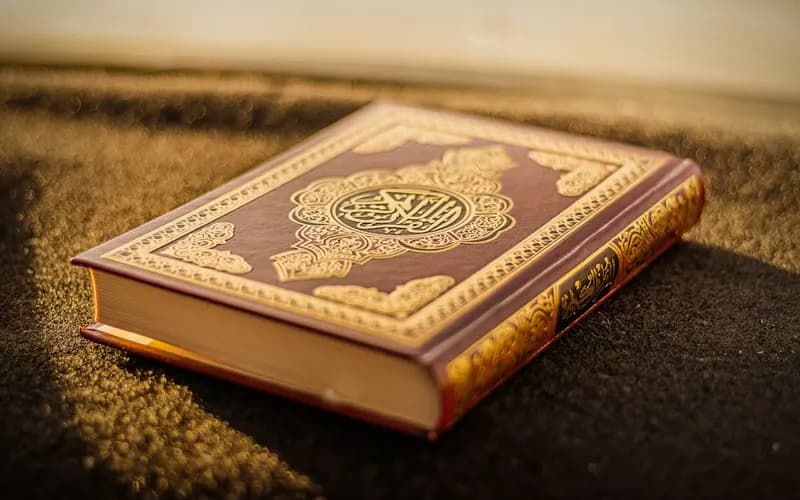
The Process: Recitation, Memorization, and Writing
Revelations came to Prophet Muhammad (PBUH) gradually, not all at once. Sometimes a single verse arrived; other times, entire passages came in response to specific events, questions from companions, or community disputes. This piecemeal delivery over 23 years is well documented in historical accounts of the period.
Once a revelation came, the Prophet would recite it aloud to those around him. Two parallel preservation methods took shape immediately:
Oral memorization. Companions known as the huffaz (memorizers) committed the Quran to memory as it was revealed. Arab culture already valued memorization highly, since poetry and genealogy were preserved this way for generations before Islam. This oral tradition remains alive today; millions of Muslims worldwide memorize the entire Quran by heart.
Written recording. The Prophet appointed scribes, most notably Zaid ibn Thabit, to write down each revelation as it came. Materials available at the time included palm-leaf stalks, thin flat stones, pieces of leather, shoulder blades of animals, and parchment. These fragments were not yet bound together as one book during the Prophet's lifetime.
This dual-track system, memory and manuscript working together, is central to correcting the common misconception that the Quran was "written" in the modern sense right after each revelation. Verses were recorded quickly, but organizing them into the ordered book Muslims use today came later.
Correcting the Common Misconception About "Authorship"
A frequent misunderstanding, especially among readers coming from Biblical Studies backgrounds, is assuming the Quran developed the way the Hebrew Bible or New Testament did: through multiple human writers, editors, and councils spanning centuries, with different books attributed to different named or anonymous authors.
The Quran's history follows a different pattern entirely:
| Aspect | Quran | Bible (Old & New Testaments) |
|---|---|---|
| Time span of writing | ~23 years | Centuries across multiple eras |
| Human authors claimed | None (divine revelation to one prophet) | Multiple named and unnamed authors |
| Original language preserved | Classical Arabic, largely unchanged | Hebrew, Aramaic, Greek, with translation layers |
| Compilation timeline | Within ~20 years of the Prophet's death | Centuries after original events, through councils |
| Preservation method | Parallel memorization and written record | Primarily manuscript transmission |
Muslims believe God is the source of the Quran's words, and Prophet Muhammad (PBUH) was the messenger who received and transmitted them exactly as revealed, without altering the wording, style, or meaning. This is different from a prophet or scribe composing religious teachings in his own words, which is how many outside observers initially assume revelation works based on other religious traditions.
Compilation After the Prophet's Death
The organized, bound book most Muslims recognize today did not exist during the Prophet's lifetime. It came together in two major stages after his passing in AD 632.
Stage one: Abu Bakr's collection. After the Battle of Yamama, where a significant number of Quran memorizers were killed in battle, Umar ibn al-Khattab grew concerned that portions of the Quran could be lost if too many huffaz died. He urged the first Caliph, Abu Bakr, to order a formal collection. Zaid ibn Thabit was tasked with gathering the scattered written fragments and cross-checking them against the memorization of multiple companions before compiling a single master copy. This account is recorded in Sahih al-Bukhari, one of the most trusted hadith collections in Islam.
Stage two: Uthman's standardization. As Islam spread rapidly beyond Arabia into Syria, Iraq, and Egypt, slight differences in recitation dialect began causing confusion among new Muslim communities. Caliph Uthman ibn Affan, the third Caliph, ordered that Abu Bakr's master copy be used to produce standardized official copies, written in one dialect (that of the Quraysh, the Prophet's own tribe), which were then distributed to major cities. Other regional variant copies were retired from public use to prevent disputes. This standardized text is essentially what Muslims read worldwide today.
If you want to explore the broader religious and historical context of this sacred text, our detailed guide on the Quran as Islam's holy book walks through its structure, themes, and significance for Muslim life.
Why This Matters Today
Understanding this history helps answer a question that comes up often in interfaith discussions and academic study: how can Muslims trust that today's Quran matches what was revealed 1,400 years ago? The answer lies in the combination of continuous oral transmission (an unbroken chain of memorization passed generation to generation) alongside written manuscripts cross-verified during Abu Bakr and Uthman's compilations.
This dual preservation system is genuinely unusual compared to how other ancient religious texts survived, and it's a detail often left out of surface-level summaries. Scholars differ on some historical details of the exact compilation timeline and the number of variant readings (qira'at) that were preserved, but there is broad agreement among Islamic scholars on the core narrative: revelation through Gabriel, oral and written preservation, and formal compilation shortly after the Prophet's death.
Key Takeaways
- Muslims believe God revealed the Quran to Prophet Muhammad (PBUH) through Angel Gabriel over approximately 23 years (AD 610-632).
- The Prophet Muhammad (PBUH) did not write the Quran himself; he was ummi (unlettered) and recited revelations for scribes to record.
- Zaid ibn Thabit led the written compilation efforts under both Caliph Abu Bakr and Caliph Uthman.
- The Quran was preserved through parallel oral memorization and written manuscripts, unlike single-track manuscript transmission of many ancient texts.
- Caliph Uthman standardized one official script around AD 650 to prevent recitation disputes as Islam spread geographically.
- The compilation history is documented in classical sources like Sahih al-Bukhari, not just later tradition.
Understanding where the Quran came from naturally leads to questions about its structure, its central messages, and how it's studied today. If you're new to these topics, exploring Islamic beliefs about angels offers useful context, since Angel Gabriel plays a central role in the revelation story itself.
About This Article
Reviewed by: Reading Islam Editorial Team
Review Process: Editorial review team responsible for checking content structure, sources, and factual accuracy.
Last Updated: 2026-07-14
Sources and References
Quran:
- Surah Al-Alaq 96:1-5 (First revelation)
- Surah Al-Baqarah 2:23 (Literary challenge)
Hadith:
- Sahih al-Bukhari, accounts of the compilation under Abu Bakr and Uthman (sunnah.com)
Websites and Academic Resources:
- Quran.com - Quran text, translations, and tafsir
- IslamQA.info - Scholarly answers on Quranic history and preservation
- The Muslim Lantern, "The History of the Quranic Text: A Breakdown From Revelation to Compilation," Muhammed Ali
Reading Islam Editorial Team
ExpertA research team creating educational content about Islamic history, culture, and faith using verified historical references and trusted sources.
Explore more
Continue Reading
Popular Umrah Guides
Umrah Guide Step by Step: How to Perform Umrah for Beginners
How to Perform Umrah Step-by-Step (A Beginner's Guide)
Complete Umrah Duas Guide: All Prayers & Supplications with Arabic Text
Ultimate Umrah Packing List 2026: What to Bring & What to Leave
15 Common Umrah Mistakes to Avoid: Expert Tips for a Valid Pilgrimage
Explore Makkah & Kaaba
Qibla Direction Explained: How Muslims Face the Kaaba in Prayer
الحجر الأسود (Hajar al-Aswad): Meaning, History, and Place in Tawaf
Kaaba Door Guide: Why It Is Raised, How It Changed, and Why It Matters
Mecca Meaning in Islam: Why It Is Called Makkah al-Mukarramah
Masjid al-Haram Map Guide: How to Understand the Sacred Mosque Layout
Masjid al-Haram Guide: The Sacred Makkah Mosque at the Heart of Islam
Recommended Travel Resources
Best Umrah Packages 2025: VIP vs Budget Options
Best Umrah Packages 2026: Finding Affordable Options
Economy Umrah Packages: Affordable Booking Guide for Budget Pilgrims
Umrah Package With Flights: What Should Be Included Before You Book
Air Ticket for Umrah: Flight Booking Guide, Timing, and Package Strategy
Umrah Expenses from Pakistan: Full Cost Breakdown and Booking Plan