Surah Al-Fatiha Meaning and Translation: The Complete Guide (2026)
Every Muslim recites Surah Al-Fatiha multiple times a day, often without pausing to reflect on the depth of its seven short verses. Known as "The Opening," this chapter begins the Quran and forms the backbone of every unit of formal prayer. Understanding its meaning transforms a routine recitation into a conscious conversation with Allah.
Quick Answer
Surah Al-Fatiha ("The Opening") is the first chapter of the Quran, containing seven verses that praise Allah, acknowledge His mercy and sovereignty, and ask for guidance along the straight path. It is recited in every rak'ah of the five daily prayers and is considered the summary of the entire Quran's message.
What Does "Al-Fatiha" Mean?
The word Fatiha comes from the Arabic root fataha, meaning "to open." As the first chapter of the Quran, it literally opens the scripture. Beyond its position, Muslim scholars describe it as the spiritual opening of the heart to divine guidance, and the opening of every valid prayer, since the Prophet Muhammad (peace be upon him) stated that there is no prayer for the one who does not recite it (Sahih al-Bukhari).
Al-Fatiha carries several other names in Islamic tradition. It is called Umm al-Kitab ("Mother of the Book") because it contains the essential themes of the entire Quran in condensed form. It is also known as As-Sab' al-Mathani ("The Seven Oft-Repeated Verses"), referencing both its verse count and its constant repetition in prayer, and Surat al-Hamd ("The Chapter of Praise") because it opens with praise of Allah.
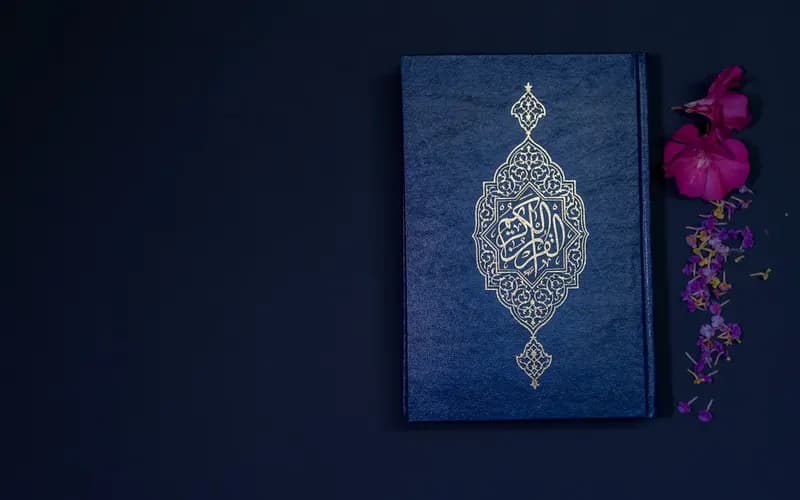
The Seven Verses: Arabic, Transliteration, and Translation
Surah Al-Fatiha consists of seven verses, each carrying a distinct theological weight. Below is a simplified breakdown for readers studying the holy book of Islam for the first time.
| Verse | Arabic Theme | English Translation |
|---|---|---|
| 1 | Bismillah | In the name of Allah, the Most Gracious, the Most Merciful |
| 2 | Al-Hamd | All praise is due to Allah, Lord of all the worlds |
| 3 | Ar-Rahman, Ar-Rahim | The Most Gracious, the Most Merciful |
| 4 | Maliki Yawm ad-Din | Master of the Day of Judgment |
| 5 | Iyyaka Na'budu | You alone we worship, and You alone we ask for help |
| 6 | Ihdina | Guide us to the straight path |
| 7 | Sirat al-Mustaqim | The path of those You have blessed, not those who earned Your anger or went astray |
This structure moves from praise (verses 1–4) to a personal declaration of worship and dependence (verse 5), and finally to a direct request for guidance (verses 6–7). Many scholars note that the shift from third-person praise ("Lord of the worlds") to second-person address ("You alone we worship") reflects a spiritual closeness that develops as the servant speaks to Allah directly.
Verse-by-Verse Meaning Explained
Verse 1 – Bismillah ar-Rahman ar-Rahim: This opening phrase, known as the Basmala, is recited before nearly every chapter of the Quran and before daily actions. It sets the intention that everything done afterward is done in Allah's name, invoking both His general mercy (Rahman) toward all creation and His special mercy (Rahim) toward believers.
Verse 2 – Al-hamdu lillahi Rabbi al-'alamin: "All praise belongs to Allah, Lord of all the worlds." This establishes gratitude and acknowledges Allah as Creator and Sustainer of everything that exists, not just humanity.
Verse 3 – Ar-Rahman ar-Rahim: Repeating the attributes of mercy reinforces that Allah's relationship with creation is rooted in compassion, not merely power or judgment.
Verse 4 – Maliki yawmi ad-din: "Master of the Day of Judgment." This verse reminds the reciter of accountability, balancing the earlier emphasis on mercy with the reality of divine justice.
Verse 5 – Iyyaka na'budu wa iyyaka nasta'in: "You alone we worship, and You alone we ask for help." This is often considered the central verse of the surah, expressing pure monotheism (Tawhid) — worship and reliance directed solely to Allah.
Verse 6 – Ihdina as-sirat al-mustaqim: "Guide us to the straight path." This is a request for moral and spiritual direction in daily life, not merely a plea for correct belief.
Verse 7 – Sirat alladhina an'amta 'alayhim, ghayri al-maghdubi 'alayhim wa la ad-dallin: The final verse asks to follow the path of the righteous, avoiding both the path of those who earned divine anger and those who went astray.
Why This Matters Today
For many Muslims, Al-Fatiha becomes so familiar through repetition in Salah that its meaning can fade into background noise. Reflecting on the translation regularly can restore that connection. It reminds worshippers that prayer is not just physical movement but a dialogue — praising Allah, affirming complete dependence on Him, and asking for guidance in navigating modern challenges like work, family, and personal struggles.
This surah is also the first chapter taught to new Muslims and young children, forming the foundation of their relationship with the Quran. Its brevity makes it accessible, yet its content covers the essentials of belief: Tawhid, mercy, accountability, worship, and guidance. This is part of why the Prophet Muhammad (peace be upon him) described it as the greatest chapter in the Quran, as recorded in Sahih al-Bukhari.
Common Misconceptions
"Fatiha is only for funerals." In many cultures, people associate reciting Al-Fatiha primarily with visiting graves or offering condolences. While it is often recited on such occasions as a supplication, its primary and most frequent use is within the five daily prayers, not funerary rites.
"Any translation can replace the Arabic in prayer." Since the Quran's meaning is intertwined with its precise Arabic wording, the majority of scholars agree that translations may aid understanding, but the ritual recitation of Salah must be in Arabic.
"Al-Fatiha and Surah Ikhlas serve the same purpose." While both are short and frequently recited, Surah Al-Kafirun and Al-Ikhlas focus on disassociation from disbelief and affirming Allah's oneness respectively, whereas Al-Fatiha is structured as a comprehensive prayer for guidance recited in every prayer cycle.
Al-Fatiha in Daily Prayer
Because Al-Fatiha must be recited in every rak'ah, understanding its meaning directly enhances the quality of one's Islamic prayer times observance. Muslims are encouraged to pause mentally on each verse rather than rushing through the recitation. This mindful approach is sometimes called khushu (humble concentration) and is considered essential to a spiritually fulfilling prayer.
Prayer Times for Mecca, Saudi Arabia
For those preparing to visit the sacred sites where these verses are recited constantly, resources like the Hajj in Islam guide and the Umrah guide for beginners offer further context on how prayer and recitation intertwine with the pilgrimage experience. Understanding Mecca's significance in Islam also helps frame why this surah holds such centrality in worship performed there.
Key Takeaways
- Al-Fatiha means "The Opening" and is the first chapter of the Quran, containing seven verses.
- It is also called Umm al-Kitab, As-Sab' al-Mathani, and Surat al-Hamd.
- The surah moves from praise of Allah to a personal declaration of worship and a request for guidance.
- It must be recited in every rak'ah of the five daily prayers; a prayer without it is considered invalid by the majority of scholars.
- Its meaning covers monotheism, mercy, accountability, and the plea to follow the straight path.
- Reflecting on its translation helps deepen concentration (khushu) during Salah.
Common Questions Pilgrims Ask
Why is Surat Al-Fatihah so important? Al-Fatiha is recited in every unit (rak'ah) of the five daily prayers, making it the most repeated chapter in the Quran. It summarizes the core of faith—praise, submission, and a plea for guidance—which is why the Prophet Muhammad (peace be upon him) called it the greatest surah in the Quran (Sahih al-Bukhari).
What does Al-Fatiha mean in English? Al-Fatiha translates to "The Opening." It opens the Quran and is also considered the opening of every prayer, since a prayer without reciting it is not valid according to the majority of scholars.
How many verses does Surah Al-Fatiha have? Surah Al-Fatiha contains seven verses (ayat). These verses move from praising Allah to acknowledging His mercy and sovereignty, then to a direct request for guidance along the straight path.
Can Surah Al-Fatiha be recited in English during prayer? No. The prayer recitation must be in the original Arabic, since the Quran's linguistic and spiritual structure is preserved only in Arabic. Translations are used for understanding the meaning, not for ritual recitation.
What is another name for Surah Al-Fatiha? Surah Al-Fatiha is also known as "Umm al-Kitab" (Mother of the Book), "As-Sab' al-Mathani" (The Seven Oft-Repeated Verses), and "Surat al-Hamd" (The Chapter of Praise).
Is Surah Al-Fatiha a Meccan or Medinan surah? Most scholars classify Surah Al-Fatiha as a Meccan surah, revealed early in the Prophet's mission before the migration to Madinah, though a minority opinion holds it was revealed in Madinah.
Sources and References
Quran:
- Surah Al-Fatiha, 1:1-7 (Quran.com)
Hadith:
- Sahih al-Bukhari, on the prayer requiring recitation of Al-Fatiha (Sunnah.com)
Academic and Islamic Q&A Websites:
- Quran.com — Surah Al-Fatiha translation and tafsir resources
- Sunnah.com — Hadith collections referencing the importance of Al-Fatiha
- IslamQA.info — Scholarly rulings on recitation requirements in prayer
Reading Islam Editorial Team
ExpertA research team creating educational content about Islamic history, culture, and faith using verified historical references and trusted sources.
Explore more
Continue Reading
Popular Umrah Guides
Umrah Guide Step by Step: How to Perform Umrah for Beginners
How to Perform Umrah Step-by-Step (A Beginner's Guide)
Complete Umrah Duas Guide: All Prayers & Supplications with Arabic Text
Ultimate Umrah Packing List 2026: What to Bring & What to Leave
15 Common Umrah Mistakes to Avoid: Expert Tips for a Valid Pilgrimage
Explore Makkah & Kaaba
Qibla Direction Explained: How Muslims Face the Kaaba in Prayer
الحجر الأسود (Hajar al-Aswad): Meaning, History, and Place in Tawaf
Kaaba Door Guide: Why It Is Raised, How It Changed, and Why It Matters
Mecca Meaning in Islam: Why It Is Called Makkah al-Mukarramah
Masjid al-Haram Map Guide: How to Understand the Sacred Mosque Layout
Masjid al-Haram Guide: The Sacred Makkah Mosque at the Heart of Islam
Recommended Travel Resources
Best Umrah Packages 2025: VIP vs Budget Options
Best Umrah Packages 2026: Finding Affordable Options
Economy Umrah Packages: Affordable Booking Guide for Budget Pilgrims
Umrah Package With Flights: What Should Be Included Before You Book
Air Ticket for Umrah: Flight Booking Guide, Timing, and Package Strategy
Umrah Expenses from Pakistan: Full Cost Breakdown and Booking Plan