Advertisement
Hadith on Hajj from Sahih Muslim: The Complete Book of Pilgrimage Explained
Sahih Muslim dedicates one of its largest chapters to Kitab al-Hajj — the Book of Pilgrimage. This chapter contains hundreds of hadith narrations covering every aspect of the Hajj and Umrah rituals, from entering ihram to the farewell tawaf. For any Muslim preparing for pilgrimage, this chapter is essential reading.
This article highlights the most important narrations from Kitab al-Hajj, explains their rulings, and connects them to practical Umrah preparation.
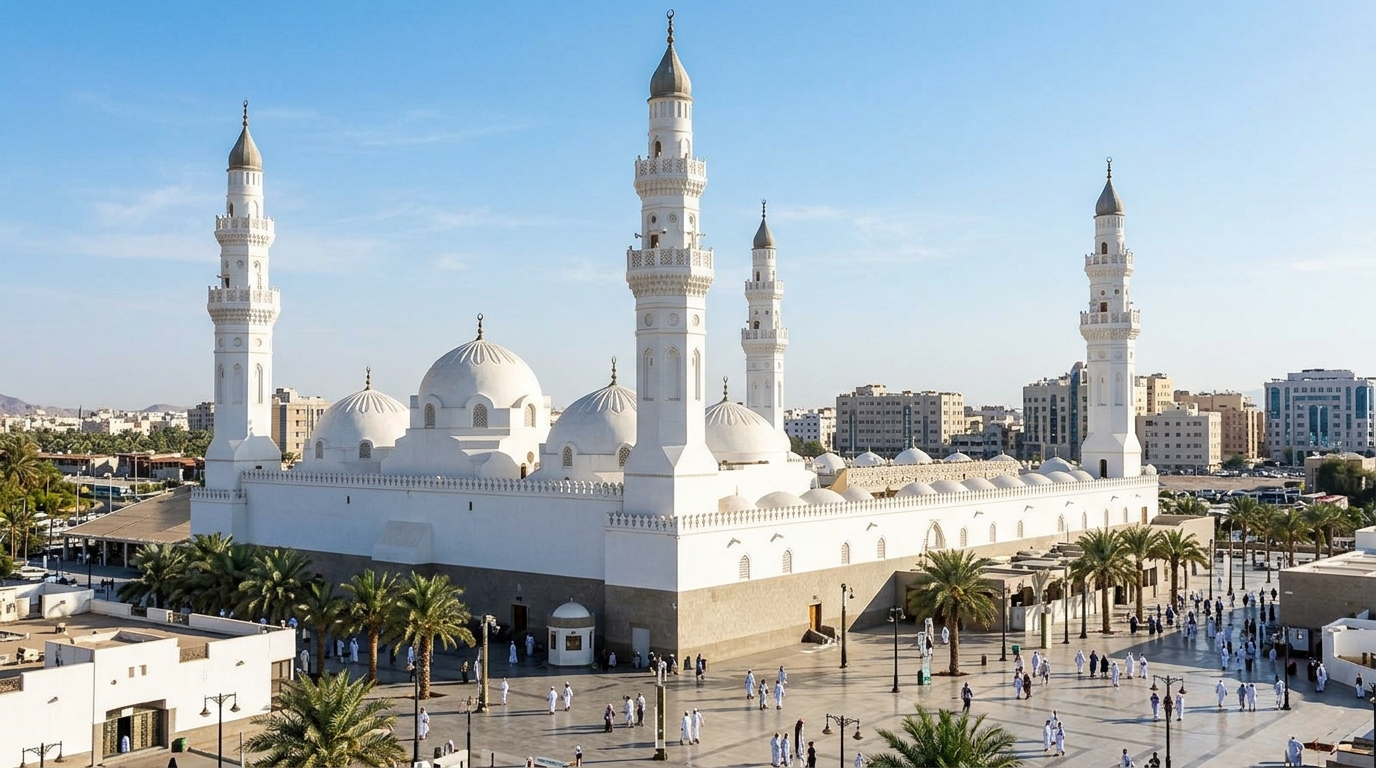
The Obligation of Hajj
The foundation of the entire chapter rests on the obligation itself:
"Islam is built upon five pillars: testifying that there is no god but Allah and that Muhammad is the Messenger of Allah, establishing prayer, paying zakat, performing Hajj to the House, and fasting in Ramadan." — Sahih Muslim, Hadith 16
Hajj is not optional for those who have the means. This hadith establishes it as one of Islam's five foundational pillars.
The Urgency of Performing Hajj
"Whoever intends to perform Hajj, let him hasten to do so, for one may fall ill, lose his mount, or face other needs." — Reported by Ahmad and Ibn Majah, graded hasan
The scholars derive from this that delaying Hajj without valid excuse is sinful for those who are financially and physically capable.
Key Hadith on Ihram
The Miqat Boundaries
"The Prophet ﷺ designated Dhul Hulayfah as the miqat for the people of Madinah, al-Juhfah for the people of Sham, Qarn al-Manazil for the people of Najd, and Yalamlam for the people of Yemen." — Sahih Muslim, Kitab al-Hajj
These boundaries remain in effect today. Every pilgrim performing Umrah must enter ihram before crossing their designated miqat. For detailed guidance on this first step, see our complete Umrah guide.
What Is Prohibited in Ihram
Sahih Muslim records detailed narrations about ihram restrictions:
- No perfume or scented products
- No cutting hair or nails
- No hunting
- No marriage contracts
- Men must not cover their heads or wear fitted clothing
- Women must not wear niqab or gloves
"A muhrim (person in ihram) should not wear a shirt, turban, trousers, hooded cloak, or leather socks." — Sahih Muslim, Kitab al-Hajj
Hadith on Tawaf
The Virtue of Tawaf
"Whoever performs Tawaf around this House seven times and keeps track of it, it will be as if he freed a slave." — Reported by al-Tirmidhi, graded sahih
Starting at the Black Stone
"The Prophet ﷺ entered the Sacred Mosque and went to the Black Stone, touched it, then proceeded to the right and jogged three rounds and walked four rounds." — Sahih Muslim, Kitab al-Hajj
This establishes the Sunnah of starting tawaf at the Black Stone, moving counterclockwise, with men performing ramal (jogging) in the first three circuits.
Hadith on Sa'i Between Safa and Marwa
"Verily, Safa and Marwa are among the symbols of Allah." — Quran, 2:158
The Prophet ﷺ elaborated:
"Begin with what Allah began with." — Sahih Muslim, Kitab al-Hajj
This means starting Sa'i at Safa, not Marwa — a common mistake among first-time pilgrims.
The Farewell Sermon and Its Hajj Context
One of the most powerful narrations in Kitab al-Hajj is the Prophet's farewell address during his only Hajj:
"O people, your blood, your property, and your honour are sacred to you, as sacred as this day of yours, in this month of yours, in this land of yours." — Sahih Muslim, Kitab al-Hajj
This sermon, delivered on the plains of Arafat, established principles of human rights, economic justice, and racial equality fourteen centuries before the modern era.
Applying These Hadith to Your Umrah
While Umrah does not include Arafat, Muzdalifah, or the stoning rituals, it shares the core acts with Hajj:
- Ihram — The same rules apply
- Tawaf — The same seven circuits, the same starting point
- Sa'i — The same seven laps between Safa and Marwa
- Hair cutting — The same completion ritual
Every hadith about these shared rituals in Kitab al-Hajj directly informs your Umrah practice. Our Umrah duas guide provides the specific supplications authenticated by these narrations.
The Spiritual Lessons from Kitab al-Hajj
Equality Before Allah
In ihram, there is no distinction between rich and poor. The king and the labourer wear the same white cloth. This is a living demonstration of the Prophet's farewell sermon: "No Arab has superiority over a non-Arab."
Patience as Worship
The hadith in Kitab al-Hajj repeatedly describe crowding, heat, exhaustion, and difficulty. The Prophet ﷺ endured all of this with patience and grace. For the modern pilgrim, these narrations are a reminder that the hardship is part of the worship.
Sincerity Over Ritual
"Actions are judged by intentions." — Sahih Bukhari and Muslim
This principle, referenced throughout Kitab al-Hajj, means that the quality of your pilgrimage depends not on how perfectly you perform each step, but on the sincerity of your heart.
Common Questions Pilgrims Ask Pilgrims Ask
What is Kitab al-Hajj in Sahih Muslim?
Kitab al-Hajj is the Book of Pilgrimage in Sahih Muslim. It contains hundreds of hadith narrations covering Hajj and Umrah rituals, ihram rules, tawaf procedures, Sa'i, the farewell sermon, and the spiritual dimensions of pilgrimage.
Do the hadith on Hajj also apply to Umrah?
Yes, for the shared rituals. Ihram rules, tawaf procedures, Sa'i, and hair cutting are common to both Hajj and Umrah. The hadith governing these acts apply equally to both forms of pilgrimage.
What is the most important hadith about Hajj?
The hadith establishing Hajj as the fifth pillar of Islam (Sahih Muslim, Hadith 16) is foundational. The farewell sermon delivered during the Prophet's Hajj is considered one of the most important speeches in human history.
Is reading Kitab al-Hajj necessary before performing Umrah?
While not obligatory, studying the authentic hadith about pilgrimage significantly enhances your understanding and spiritual experience. It transforms Umrah from a set of physical motions into an informed act of worship.
Where can I find the full text of Kitab al-Hajj?
The full Arabic text with English translation is available on sunnah.com under Sahih Muslim, Book of Hajj. For a practical application of these hadith, see our complete Umrah guide.
Conclusion
Kitab al-Hajj in Sahih Muslim is not merely a reference manual — it is a window into the Prophet's own pilgrimage. Every hadith in this chapter was lived before it was narrated. When you read about the Prophet ﷺ touching the Black Stone, jogging during tawaf, or standing on Arafat in the heat, you are reading about the same rituals you will perform.
Study these narrations. Internalise their lessons. And when you stand before the Kaaba, know that you are following in the exact footsteps of the Prophet ﷺ — guided by the most authentic record of his words and actions.
May Allah grant you an accepted pilgrimage built on knowledge, sincerity, and love. Ameen.
Quran and Sunnah references
- Quran 2:196 on completing Hajj and Umrah for Allah.
- Quran 3:97 on the obligation of Hajj for those able to undertake it.
- Sahih al-Bukhari and Sahih Muslim: Umrah to Umrah expiates sins between them.
Explore more
Continue Reading
Popular Umrah Guides
Umrah Guide Step by Step: How to Perform Umrah for Beginners
How to Perform Umrah Step by Step (Complete Guide)
Complete Umrah Duas Guide: All Prayers & Supplications with Arabic Text
Ultimate Umrah Packing List 2024: What to Bring & What to Leave
15 Common Umrah Mistakes to Avoid: Expert Tips for a Valid Pilgrimage
Explore Makkah & Kaaba
Qibla Direction Explained: How Muslims Face the Kaaba in Prayer
الحجر الأسود (Hajar al-Aswad): Meaning, History, and Place in Tawaf
Kaaba Door Guide: Why It Is Raised, How It Changed, and Why It Matters
Mecca Meaning in Islam: Why It Is Called Makkah al-Mukarramah
Masjid al-Haram Map Guide: How to Understand the Sacred Mosque Layout
Masjid al-Haram Guide: The Sacred Makkah Mosque at the Heart of Islam
Recommended Travel Resources
Best Umrah Packages 2025: Prices, Options & Guide
Best Umrah Packages 2026 (Affordable Options & Tips)
Economy Umrah Packages: Affordable Booking Guide for Budget Pilgrims
Umrah Package With Flights: What Should Be Included Before You Book
Air Ticket for Umrah: Flight Booking Guide, Timing, and Package Strategy
Umrah Expenses from Pakistan: Full Cost Breakdown and Booking Plan
Frequently Asked Questions
What is Kitab al-Hajj in Sahih Muslim?
Kitab al-Hajj is the Book of Pilgrimage in Sahih Muslim containing hundreds of hadith narrations covering Hajj and Umrah rituals, ihram rules, tawaf, Sa'i, and the farewell sermon.
Do the hadith on Hajj also apply to Umrah?
Yes, for shared rituals. Ihram rules, tawaf procedures, Sa'i, and hair cutting are common to both Hajj and Umrah, and the hadith governing these acts apply equally.
What is the most important hadith about Hajj?
The hadith establishing Hajj as the fifth pillar of Islam (Sahih Muslim, Hadith 16) is foundational. The farewell sermon is considered one of the most important speeches in human history.
Is reading Kitab al-Hajj necessary before performing Umrah?
While not obligatory, studying authentic hadith about pilgrimage significantly enhances your understanding and transforms Umrah from physical motions into an informed act of worship.
Where can I find the full text of Kitab al-Hajj?
The full Arabic text with English translation is available on sunnah.com under Sahih Muslim, Book of Hajj.
Advertisement