What Does the Quran Say About Women? Rights and Roles Explained (2026)
Many people ask a straightforward question: does the Quran actually protect women, or does it restrict them? This confusion often comes from mixing cultural practices in certain Muslim-majority regions with what the Quran itself teaches. Understanding the difference matters, because millions of Muslim women look to the Quran as the direct source of their rights, not to local tradition or media portrayals.
This article looks at what the Quran states in its own words, supported by authentic Hadith and recognized scholarship, to separate fact from misconception.
Quick Answer
The Quran describes women as spiritually equal to men, granted rights to inheritance, property ownership, education, consent in marriage, and protection from abuse. Surah An-Nisa 4:32 and Surah Al-Ahzab 33:35 confirm that men and women are rewarded equally for good deeds. While family roles are often complementary rather than identical, Islamic teaching does not place women beneath men in worth or dignity.
Historical Context: Women Before the Quran's Revelation
Historical records describe practices in pre-Islamic Arabia that included burying infant daughters alive and denying women any inheritance. The Quran directly addressed this cruelty:
"And when the girl [who was] buried alive is asked, for what sin she was killed." (Surah At-Takwir 81:8-9)
This verse was revealed as a rebuke, not a passive description. Islamic scholars point to this as one of the clearest signals that the Quran arrived to correct, not continue, the mistreatment of women. Inheritance laws followed soon after, giving women a guaranteed legal share for the first time in that society (Surah An-Nisa 4:11-12).
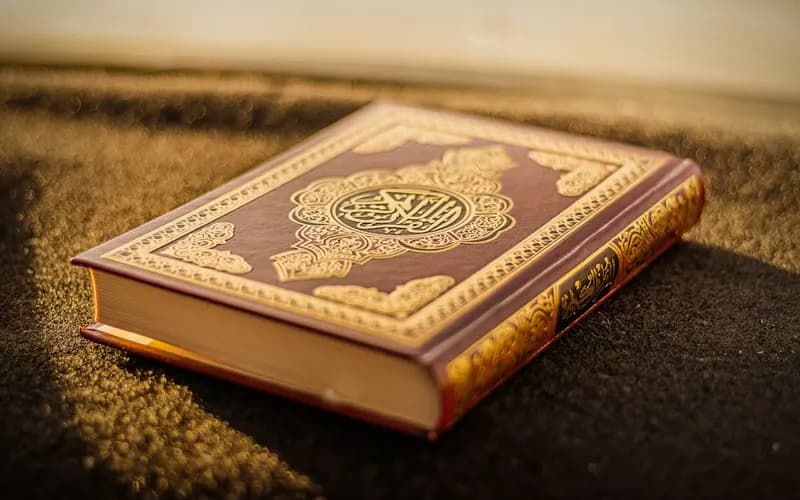
What the Quran Says About Women's Rights
Spiritual Equality
The Quran is direct about equal spiritual standing between men and women:
"Indeed, the Muslim men and Muslim women, the believing men and believing women... for them Allah has prepared forgiveness and a great reward." (Surah Al-Ahzab 33:35)
This verse lists over ten qualities and states plainly that men and women share identical spiritual reward. No distinction is made in worship, sincerity, or accountability before Allah.
Right to Inheritance and Property
Before the Quran's revelation, women in much of Arabia had no legal claim to inheritance. Surah An-Nisa 4:7 established fixed shares for daughters, wives, and mothers, something legally unprecedented at the time. Women also retain full ownership of their wealth after marriage; a husband has no automatic claim over his wife's earnings or property under Islamic law.
Right to Consent in Marriage
Marriage in Islam requires the woman's consent. Prophet Muhammad ﷺ addressed this directly, as recorded in Sahih Bukhari, stating that a previously married woman cannot be married off without her expressed permission, and even a virgin's silence must reflect agreement, not coercion. Scholars across schools of thought affirm that forced marriage contradicts Islamic teaching.
Right to Education and Work
Islam does not restrict women from seeking knowledge. Khadijah bint Khuwaylid (رضي الله عنها), the first wife of Prophet Muhammad ﷺ, ran her own successful trading business before and during her marriage. Aisha bint Abi Bakr (رضي الله عنها) became one of the most referenced scholars of Hadith in Islamic history, teaching both men and women after the Prophet's ﷺ passing.
Common Misconceptions
Misconception: The Quran treats women as property. This claim usually comes from confusing marriage contracts (which protect a woman's financial rights through mahr) with ownership. The Quran describes marriage as a relationship of mutual mercy and affection (Surah Ar-Rum 30:21), not possession.
Misconception: Women's testimony is always worth half a man's. This rule applies specifically to certain financial contract testimonies mentioned in Surah Al-Baqarah 2:282, related to the historical context of women's limited involvement in commerce at the time. It does not apply universally across all legal or criminal matters, a distinction often missed by critics and casual readers alike.
Misconception: Islam prevents women from having any public role. Historical sources describe women serving as scholars, nurses on battlefields, and advisors. Umm Salamah (رضي الله عنها), a wife of Prophet Muhammad ﷺ, gave counsel during the Treaty of Hudaybiyyah that the Prophet ﷺ acted upon directly, a well-documented example of a woman's advice shaping a major political decision.
Rights vs. Cultural Practice: A Comparison
| Practice | Quranic Teaching | Common Cultural Distortion |
|---|---|---|
| Inheritance | Fixed legal share guaranteed (Surah An-Nisa 4:11) | Some families deny daughters their share entirely |
| Marriage | Requires the woman's consent | Forced marriages occur in some communities |
| Education | Encouraged for both genders | Girls' schooling restricted in some regions |
| Financial rights | Wife keeps her own earnings/property | Husband sometimes controls wife's income culturally |
| Divorce | Woman may initiate khula | Social stigma discourages women from seeking it |
This table highlights something scholars frequently emphasize: many practices criticized as "Islamic" are actually regional customs (urf) that contradict the Quran rather than reflect it. For a deeper look at how the Quran was revealed and preserved as a source for these rulings, see First Revelation of Quran to Prophet Muhammad.
Roles in Family and Society
The Quran describes family roles as complementary rather than identical. Surah An-Nisa 4:34 discusses financial responsibility resting primarily on men, while women are not obligated to spend their own wealth on the household unless they choose to. This is often misunderstood as inequality, when scholars explain it as a legal protection: women retain financial security regardless of marital contribution.
At the same time, nothing in the Quran restricts women from working, leading in appropriate contexts, or contributing to public life. The scholarly principle of gradualism and shura (consultation) shaped how early Muslim communities expanded women's participation over time, rather than imposing sudden social change. This reflects a broader Quranic pattern of reform introduced steadily, similar to how practices around fasting and prayer were phased in gradually, a pattern worth exploring in What Is Tawheed in Islam? for readers wanting the broader theological framework behind Islamic law.
Why This Matters Today
Questions about women's status in Islam are not just academic. They affect how young Muslim women understand their own worth, and how non-Muslims perceive a faith practiced by roughly two billion people worldwide. When cultural practices get mistaken for religious commandments, both Muslim women and outside observers lose access to what the Quran actually says.
Reading the primary text directly, alongside recognized tafsir (exegesis) and Hadith collections, remains the most reliable path to clarity. Resources like quran.com allow readers to access verses in Arabic alongside multiple English translations, which helps avoid relying on secondhand summaries alone. For questions about specific rulings, islamqa.info provides scholarly answers grounded in the four major schools of Islamic jurisprudence.
Key Takeaways
- The Quran corrected pre-Islamic practices like female infanticide and denial of inheritance.
- Surah Al-Ahzab 33:35 establishes spiritual equality between men and women explicitly.
- Women retain full rights to property, education, consent in marriage, and initiating divorce (khula).
- Family roles are described as complementary, with financial responsibility generally placed on men.
- Many practices criticized globally reflect cultural distortion (urf), not Quranic teaching.
- Female companions like Khadijah, Aisha, and Umm Salamah (رضي الله عنهن) show historical precedent for women's scholarship and public influence.
Islamic Takeaway
The Quran's treatment of women reflects a consistent theme across the text: dignity, protection, and accountability apply equally to men and women before Allah. Surah An-Nahl 16:97 promises a good life and full reward to "whoever does righteousness, whether male or female, while he is a believer." That verse alone answers much of the confusion this topic generates.
Readers looking to strengthen their understanding should return to the Quran itself, alongside authentic Hadith collections like Sahih Bukhari and Sahih Muslim available at sunnah.com, and consult recognized scholars rather than secondhand claims. For those exploring how these teachings tie into broader Islamic belief, Does Islam Believe in Jesus? and Angels in Islam Explained offer further grounding in how the Quran addresses foundational questions of faith.
About This Article
Reviewed by: Reading Islam Editorial Team
Review Process: Editorial review team responsible for checking content structure, sources, and factual accuracy.
Last Updated: 2026-07-14
Sources and References
Quran:
- Surah An-Nisa 4:7, 4:11-12, 4:19, 4:32, 4:34
- Surah Al-Ahzab 33:35
- Surah Ar-Rum 30:21
- Surah At-Takwir 81:8-9
- Surah An-Nahl 16:97
- Surah Al-Baqarah 2:282
Hadith:
- Sahih Bukhari, on marriage consent
- Jami at-Tirmidhi, on kindness to family
Academic and Websites:
- Saifullin, D. (2026). Academic study on Islam and women's rights (cited by 11).
- Quran.com — Quran text and translations
- Sunnah.com — Hadith collections
- IslamQA.info — Scholarly rulings and explanations
Reading Islam Editorial Team
ExpertA research team creating educational content about Islamic history, culture, and faith using verified historical references and trusted sources.
Explore more
Continue Reading
Popular Umrah Guides
Umrah Guide Step by Step: How to Perform Umrah for Beginners
How to Perform Umrah Step-by-Step (A Beginner's Guide)
Complete Umrah Duas Guide: All Prayers & Supplications with Arabic Text
Ultimate Umrah Packing List 2026: What to Bring & What to Leave
15 Common Umrah Mistakes to Avoid: Expert Tips for a Valid Pilgrimage
Explore Makkah & Kaaba
Qibla Direction Explained: How Muslims Face the Kaaba in Prayer
الحجر الأسود (Hajar al-Aswad): Meaning, History, and Place in Tawaf
Kaaba Door Guide: Why It Is Raised, How It Changed, and Why It Matters
Mecca Meaning in Islam: Why It Is Called Makkah al-Mukarramah
Masjid al-Haram Map Guide: How to Understand the Sacred Mosque Layout
Masjid al-Haram Guide: The Sacred Makkah Mosque at the Heart of Islam
Recommended Travel Resources
Best Umrah Packages 2025: VIP vs Budget Options
Best Umrah Packages 2026: Finding Affordable Options
Economy Umrah Packages: Affordable Booking Guide for Budget Pilgrims
Umrah Package With Flights: What Should Be Included Before You Book
Air Ticket for Umrah: Flight Booking Guide, Timing, and Package Strategy
Umrah Expenses from Pakistan: Full Cost Breakdown and Booking Plan