History of the Kaaba in Makkah: The Complete Story Explained (2026)
Millions of people watch footage of pilgrims circling a cube-shaped building draped in black cloth, yet very few understand where that structure actually came from or why it has survived thousands of years of change. The history of the Kaaba in Makkah is not a single event but a long chain of construction, damage, and rebuilding that stretches from the time of Prophet Ibrahim to the modern Saudi era. Understanding this history helps explain why Muslims turn toward this specific spot five times a day and why it remains the emotional and spiritual center of Islam.
Quick Answer
The Kaaba's foundations are traditionally attributed to Prophet Ibrahim and his son Ismail, who rebuilt it on an earlier sacred site (Surah Al-Baqarah 2:127). Since then, it has been reconstructed several times due to floods, fires, and structural wear, including major rebuilding by the Quraysh tribe before Islam and by Abdullah ibn al-Zubair afterward. The location has never moved; only the physical structure has changed across centuries.
Why the Kaaba's Origins Matter
Before diving into dates and rebuilders, it helps to understand why this topic generates so much genuine curiosity. People searching for this history usually want to know two things: who actually built it, and whether the building standing today is "the same" one from Islamic tradition. Both questions matter because the Kaaba is not treated as a historical relic in Islam. It is the qibla, the direction every Muslim faces in prayer, and the destination of Hajj and Umrah. Getting the history right shapes how believers understand their connection to it.
Ibrahim, Ismail, and the Foundations of the Kaaba
Islamic tradition holds that Prophet Ibrahim and his son Ismail raised the walls of the Kaaba together, praying that Allah would accept their work: "Our Lord, accept this from us. Indeed You are the Hearing, the Knowing" (Surah Al-Baqarah 2:127). Many scholars believe the site itself predates them, meaning Ibrahim did not invent the location but rebuilt a sanctuary that already held sacred significance. This detail matters because it explains why the Kaaba was already a recognized pilgrimage site among the Arabs long before Prophet Muhammad ﷺ was born.
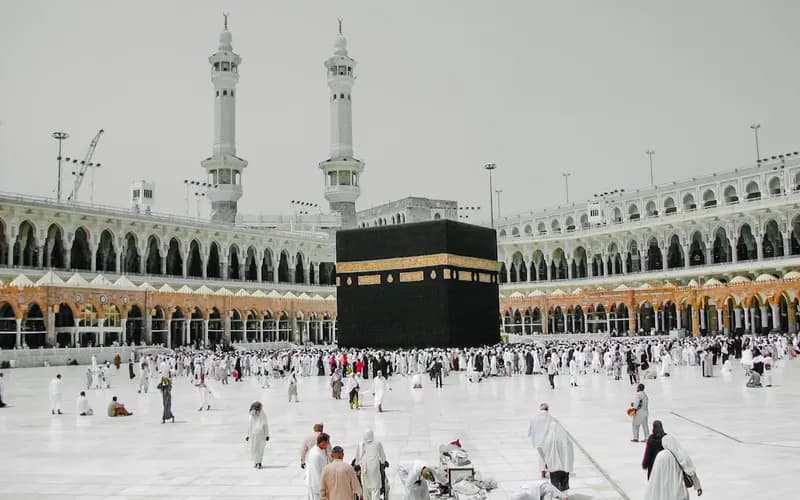
The Quran refers to the Kaaba as "the first House [of worship] established for mankind" (Surah Aal-e-Imran 3:96), a phrase that places it earlier than any specific building project, human or otherwise. This is one reason Muslims see the structure as tied to monotheistic worship rather than a monument built by any single civilization for its own glory.
The Pre-Islamic Kaaba
Long before the Prophet Muhammad's ﷺ mission began, the Kaaba functioned as a religious and commercial hub for tribes across the Arabian Peninsula. Historical accounts describe it surrounded by idols, having been transformed over generations from a monotheistic sanctuary into a shrine housing hundreds of statues representing tribal deities. Pilgrims traveled from distant regions to perform rites around it, a tradition that continued even as its original purpose became distorted.
This period also saw physical damage. Floods struck the low-lying Makkah valley repeatedly, and the Kaaba's structure suffered from erosion and weakening walls. One well-documented episode occurred when the Quraysh tribe rebuilt the Kaaba roughly five years before Prophet Muhammad's ﷺ prophethood began, after a fire and flood damage left it in poor condition. During that reconstruction, disputes arose among Quraysh clans over who should have the honor of placing the Black Stone back into its corner. A young Muhammad ﷺ, not yet a prophet, proposed a solution: placing the stone on a cloth and having representatives from each clan lift it together before he set it into place himself. This episode is recorded in early biographical sources (seerah literature) and is often cited as an early example of his reputation for fairness.
The Black Stone and Its Significance
The Black Stone, known in Arabic as al-Hajar al-Aswad, sits embedded in the eastern corner of the Kaaba. Hadith reports describe it as originating from Paradise and gradually darkening due to the sins of humanity (recorded in Jami' at-Tirmidhi, available on sunnah.com). Pilgrims performing tawaf try to touch or kiss it if possible, following the example of the Prophet ﷺ, though the Prophet himself acknowledged it was simply a stone with no power to help or harm on its own, as reported by Umar ibn al-Khattab in an authentic narration.
Reconstruction After Prophet Muhammad's Death
After the Prophet's ﷺ passing, the Kaaba underwent further changes. The most notable came during the time of Abdullah ibn al-Zubair, who governed Makkah during a period of civil conflict in the early Islamic era. He rebuilt the Kaaba according to a description he attributed to Aisha, the Prophet's wife, who reported that the Prophet ﷺ once told her he wished to restore the Kaaba to Ibrahim's original foundations, which had been altered by the Quraysh due to limited funds during their earlier rebuild (recorded in Sahih Muslim, available on sunnah.com). Ibn al-Zubair's version included the Hijr Ismail within the structure and added a second door.
Later, after Ibn al-Zubair's death, the Umayyad governor Al-Hajjaj ibn Yusuf reverted the structure closer to the Quraysh design, a decision that still shapes the Kaaba's dimensions today. This back-and-forth rebuilding is a detail many general articles skip, yet it explains why scholars discuss more than one "authentic" floor plan when referring to Ibrahim's original foundations.
Ottoman Era and Modern Reconstruction
Centuries later, in 1629 CE, a severe flood caused part of the Kaaba's walls to collapse. The Ottoman authorities undertook a major reconstruction, and much of the structure seen in photographs from the early twentieth century reflects that Ottoman-era rebuilding. The Saudi government has since carried out extensive renovations to the surrounding Masjid al-Haram complex, expanding it to accommodate the growing number of pilgrims performing Hajj and Umrah each year, though the Kaaba's core structure and location remain untouched.
| Period | Key Event | Notable Figure(s) |
|---|---|---|
| Ancient / Pre-Ibrahim | Sanctuary believed to already exist | Traditions vary |
| Time of Ibrahim | Walls rebuilt on original foundations | Ibrahim, Ismail |
| Pre-Islamic Arabia | Idols placed inside; used for tribal worship | Quraysh tribe |
| ~5 years before Prophethood | Rebuilt after fire and flood damage | Quraysh, young Muhammad ﷺ |
| Post-Prophetic era | Rebuilt to include Hijr Ismail | Abdullah ibn al-Zubair |
| Later Umayyad period | Reverted closer to Quraysh design | Al-Hajjaj ibn Yusuf |
| 1629 CE | Rebuilt after severe flood damage | Ottoman authorities |
| Modern era | Surrounding mosque expanded significantly | Saudi government |
Common Misconceptions About the Kaaba's History
A frequent misunderstanding is that the Kaaba has been moved at some point in history. It has not. Every rebuilding effort, from Ibrahim's time through the Ottoman renovation, happened on the same site in Makkah. Another common mix-up involves confusing the Kaaba with the entire Masjid al-Haram; the Kaaba is the small cube-shaped building at the center, while the mosque is the massive structure surrounding it, covered in detail in our Masjid al-Haram guide. People also sometimes assume the current building is untouched since Ibrahim's era, when in fact multiple documented reconstructions occurred, each preserving the sacred site while altering physical details like height, door placement, and the inclusion of the Hijr Ismail.
If you're building a broader picture of Makkah's sacred geography, it helps to also read about the meaning behind the name Makkah and how qibla direction developed after the Prophet's ﷺ migration to Madinah. For a deeper structural breakdown, our guide on the Kaaba's door design and history covers changes not addressed here.
Key Takeaways
- Islamic tradition attributes the Kaaba's foundations to Prophet Ibrahim and Ismail, though many scholars believe the site was sacred before them.
- The Quraysh rebuilt the Kaaba shortly before Prophet Muhammad's ﷺ prophethood, an event involving his placement of the Black Stone.
- Abdullah ibn al-Zubair later rebuilt it to match a description attributed to the Prophet ﷺ, including the Hijr Ismail.
- Al-Hajjaj ibn Yusuf reverted the structure closer to the earlier Quraysh design.
- A 1629 CE flood led to Ottoman-era reconstruction, shaping much of what pilgrims see in older photographs.
- The Kaaba's location in Makkah has never changed; only its physical structure has been rebuilt repeatedly.
Why This Matters Today
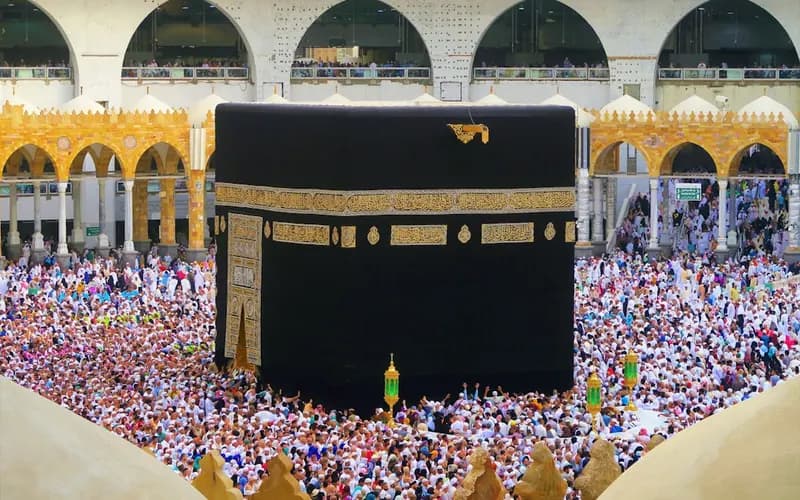
Understanding this layered history changes how many people experience Hajj or Umrah. Standing before the Kaaba, knowing it connects through centuries of rebuilding back to Ibrahim's original effort, adds weight to the ritual of tawaf. It also helps explain scholarly discussions around the Hijr Ismail, since some jurists consider it part of the Kaaba itself for ritual purposes because of its historical inclusion under Ibn al-Zubair. If you are preparing for pilgrimage, reading a practical Umrah visa guide for 2026 alongside this historical background gives both the spiritual and logistical context needed for the journey. For readers interested in how the Kaaba connects to the broader story of revelation and prophethood, our piece on the first revelation of the Quran offers useful additional context.
Sources and References
Quran:
- Surah Al-Baqarah 2:127, 2:144
- Surah Aal-e-Imran 3:96 (Read via quran.com)
Hadith:
- Sahih Muslim, narration regarding Aisha and the Kaaba's reconstruction
- Jami' at-Tirmidhi, narration regarding the Black Stone (Available via sunnah.com)
Academic and Reference:
- Early seerah (biographical) literature on the Quraysh rebuilding and the Black Stone dispute
- Historical surveys on mosque orientation and sacred geography referenced in comparative Islamic architecture studies
Websites:
- islamqa.info for scholarly rulings related to the Kaaba and Hijr Ismail
Common Questions Pilgrims Ask
Who really built the Kaaba and why is it so sacred to Islam? Islamic tradition holds that Prophet Ibrahim and his son Ismail raised the Kaaba's walls on foundations many scholars believe existed before them (Surah Al-Baqarah 2:127). It is sacred because Muslims direct their prayers toward it and because it represents the first house built for the worship of one God.
Who moved the Kaaba to where it is now? The Kaaba has never been relocated. It stands in its original location in Makkah. What changed over centuries was its physical structure, height, and materials, rebuilt multiple times due to floods, fires, and structural damage, but the site itself remained fixed.
What is the Black Stone and where does it come from? The Black Stone (al-Hajar al-Aswad) is set into the eastern corner of the Kaaba. Hadith literature describes it as a stone from Paradise that darkened over time due to the sins of mankind (sunnah.com, Jami' at-Tirmidhi). Pilgrims touch or point to it during tawaf.
Can non-Muslims visit or see the Kaaba? Non-Muslims are not permitted to enter Makkah city or the Masjid al-Haram area, which includes the Kaaba, according to Saudi regulations rooted in Islamic scholarly consensus. This restriction applies to the surrounding sacred zone, not just the mosque building itself.
Is the current Kaaba the same structure Ibrahim built? The foundations are traditionally believed to be from Ibrahim's era, but the visible structure today results from later reconstructions, including major rebuilding during the Quraysh period, by Abdullah ibn al-Zubair, and Ottoman-era renovations after flood damage.
What is the difference between the Kaaba and Masjid al-Haram? The Kaaba is the small cube-shaped building at the center, while Masjid al-Haram is the vast mosque complex surrounding it. Pilgrims perform tawaf around the Kaaba itself, while the mosque houses millions of worshippers during prayer and Hajj season.
Why do Muslims face the Kaaba during prayer? Muslims face the Kaaba, known as the qibla direction, because Allah commanded this change in the Quran (Surah Al-Baqarah 2:144). It unifies the global Muslim community in a single direction of worship, symbolizing shared faith and purpose.
Reading Islam Editorial Team
ExpertA research team creating educational content about Islamic history, culture, and faith using verified historical references and trusted sources.
Quran and Sunnah references
- Quran 2:196 on completing Hajj and Umrah for Allah.
- Quran 3:97 on the obligation of Hajj for those able to undertake it.
- Sahih al-Bukhari and Sahih Muslim: Umrah to Umrah expiates sins between them.
Explore more
Continue Reading
Popular Umrah Guides
Umrah Guide Step by Step: How to Perform Umrah for Beginners
How to Perform Umrah Step-by-Step (A Beginner's Guide)
Complete Umrah Duas Guide: All Prayers & Supplications with Arabic Text
Ultimate Umrah Packing List 2026: What to Bring & What to Leave
15 Common Umrah Mistakes to Avoid: Expert Tips for a Valid Pilgrimage
Explore Makkah & Kaaba
Qibla Direction Explained: How Muslims Face the Kaaba in Prayer
الحجر الأسود (Hajar al-Aswad): Meaning, History, and Place in Tawaf
Kaaba Door Guide: Why It Is Raised, How It Changed, and Why It Matters
Mecca Meaning in Islam: Why It Is Called Makkah al-Mukarramah
Masjid al-Haram Map Guide: How to Understand the Sacred Mosque Layout
Masjid al-Haram Guide: The Sacred Makkah Mosque at the Heart of Islam
Recommended Travel Resources
Best Umrah Packages 2025: VIP vs Budget Options
Best Umrah Packages 2026: Finding Affordable Options
Economy Umrah Packages: Affordable Booking Guide for Budget Pilgrims
Umrah Package With Flights: What Should Be Included Before You Book
Air Ticket for Umrah: Flight Booking Guide, Timing, and Package Strategy
Umrah Expenses from Pakistan: Full Cost Breakdown and Booking Plan